Table of Contents
A Permanent Solution for a Confident, Healthy Smile
If you’re missing one or more teeth, you’re not alone — and you’re certainly not out of options. Millions of adults choose dental implants in Billings, MT each year because they offer a natural, long-lasting solution that looks, feels, and functions just like real teeth. Unlike dentures or bridges, implants replace the entire tooth — including the root — giving you strength, stability, and confidence in your smile.
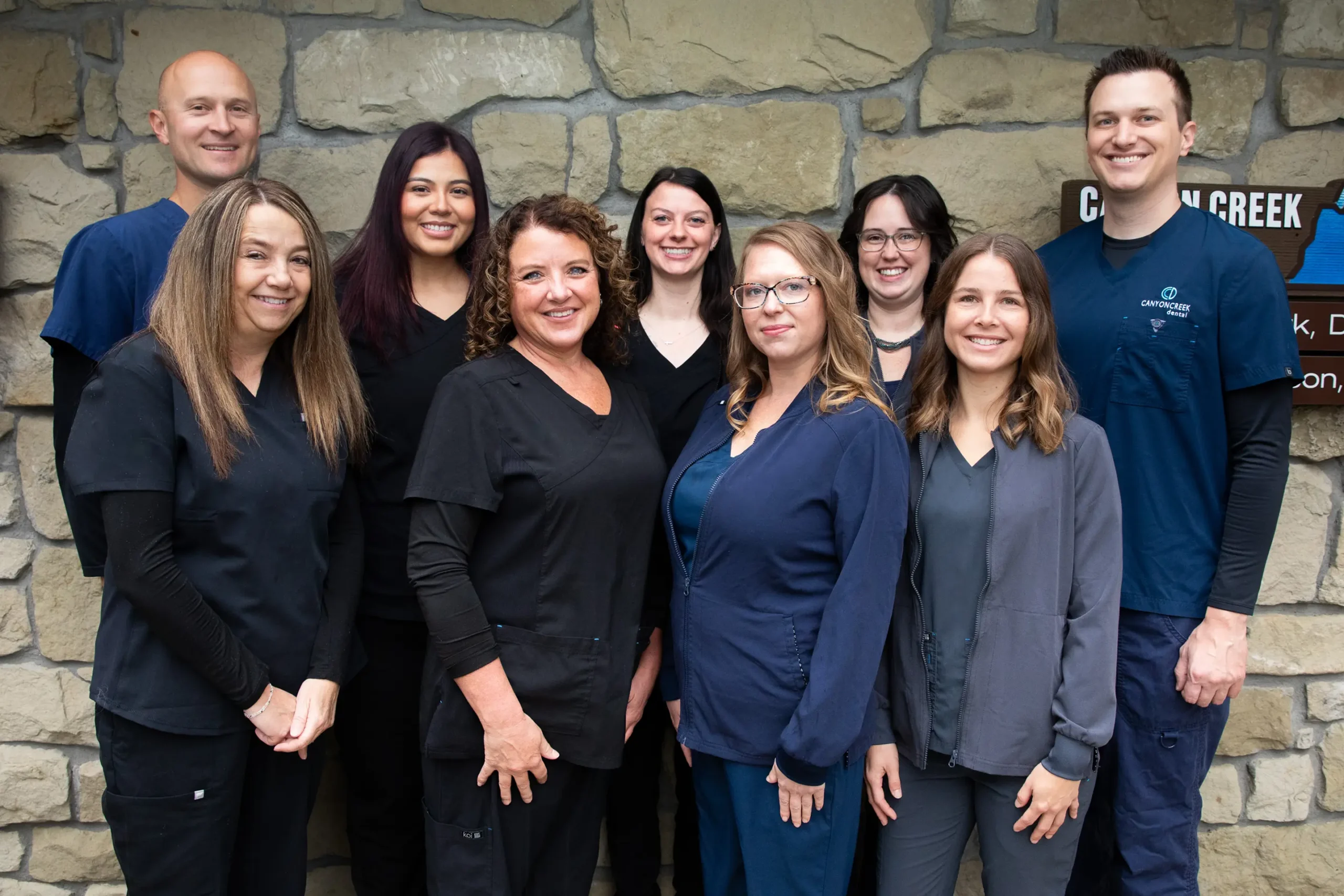
At Canyon Creek Dental, Dr. McKay Pearson and Dr. David Clark have years of experience restoring smiles with advanced implant dentistry. Whether you’re missing a single tooth or multiple teeth, dental implants could be the life-changing solution you’ve been looking for.
What Are Dental Implants?
A dental implant is a small, biocompatible titanium post that’s surgically placed into the jawbone to replace the root of a missing tooth. Once healed, the implant fuses with the bone — a process called osseointegration — creating a strong, stable foundation for a custom crown, bridge, or denture.
Each implant is made up of three main parts:
- Implant post: Acts as the artificial root.
- Abutment: Connects the implant to the restoration.
- Crown or restoration: The visible part that looks and functions like a natural tooth.
Once placed, dental implants are virtually indistinguishable from your real teeth — and with proper care, they can last a lifetime.
Why Choose Dental Implants?
Dental implants do more than fill a gap in your smile — they restore function, protect your oral health, and boost your confidence. Here’s why so many patients choose them:
- Natural appearance: Custom-made crowns match the shape, size, and color of your natural teeth.
- Superior strength: Because they integrate with the bone, implants provide unmatched stability for chewing and speaking.
- Bone preservation: Implants stimulate the jawbone, preventing the bone loss that often follows tooth loss.
- Long-lasting solution: With good care, implants can last 25+ years — often a lifetime.
- Improved oral health: Unlike traditional bridges, implants don’t require altering neighboring teeth.
Dental implants have a success rate of up to 98% and are considered the gold standard for tooth replacement.
How Dental Implants Compare to Other Tooth Replacement Options
| Feature | Dental Implants | Dental Bridges | Dentures |
|---|---|---|---|
| Durability | 25+ years (often lifetime) | 10–15 years | 5–10 years |
| Stability | Excellent – anchored in bone | Good – supported by adjacent teeth | Fair – can slip or move |
| Jawbone health | Preserves bone structure | Does not prevent bone loss | Does not prevent bone loss |
| Care & Maintenance | Same as natural teeth | Special flossing tools required | Must be removed and cleaned |
| Look & Feel | Most natural | Good, but not identical | Less natural |
| Cost | Higher upfront, lower long-term | Moderate | Lower upfront, higher long-term |
While implants require a larger initial investment, they are more cost-effective over time due to their longevity, health benefits, and low maintenance.
The Dental Implant Process: Step-by-Step
Every patient’s treatment plan is unique, but most implant procedures follow these key stages:
1. Comprehensive Consultation
Dr. Pearson or Dr. Clark will assess your oral health, jawbone density, and overall suitability for implants. Digital imaging helps us plan precise placement.
2. Implant Placement
The titanium post is surgically placed into the jawbone. This is typically done under local anesthesia, with sedation options available for added comfort.
3. Healing and Osseointegration
Over the next 3–6 months, the implant fuses with your bone. During this time, you may wear a temporary crown to maintain your smile’s appearance.
4. Abutment and Crown Placement
Once healed, a small abutment is attached to the implant, and a custom-made crown or restoration is placed on top — completing your new tooth.
Who Is a Good Candidate for Dental Implants?
Most healthy adults with missing teeth are candidates for dental implants. Ideal candidates:
- Have healthy gums and good oral hygiene habits
- Have adequate jawbone density (or are eligible for a bone graft)
- Are non-smokers or willing to quit during healing
- Are free from uncontrolled medical conditions that affect healing
Even if you’ve been told you’re not a candidate in the past, modern techniques often make implants possible. Schedule a consultation to learn more about your options.
Cost of Dental Implants in Billings, MT
The cost of dental implants in Billings, MT can vary depending on your individual needs, how many implants you require, and whether additional procedures (like bone grafting) are necessary. Here’s a general estimate:
| Type of Implant | Estimated Cost* |
|---|---|
| Single tooth implant | $3,000 – $6,000 |
| Implant-supported bridge | $5,000 – $12,000 |
| Full arch (All-on-4) | $15,000 – $30,000+ |
*These are estimates only. Your treatment plan and costs will be discussed in detail during your consultation.
Many dental insurance plans now offer partial coverage for implant restorations. Our team can help you understand your benefits and financing options.
Dental Implant Recovery: What to Expect
Most patients experience only mild discomfort after implant placement, which can be managed with over-the-counter pain relievers. Recovery times vary, but most people return to normal activities within a few days.
Tips for a smooth recovery:
- Eat soft foods for the first few days.
- Avoid smoking and alcohol during healing.
- Maintain excellent oral hygiene.
- Follow all post-op care instructions from your dentist.
Long-Term Benefits of Dental Implants
- Permanent solution: Implants are designed to last a lifetime.
- Confidence boost: Enjoy a strong, natural-looking smile.
- Better health: Maintain bone structure and prevent shifting of surrounding teeth.
- Improved quality of life: Eat, speak, and smile without worry.
FAQs About Dental Implants
Q: Are dental implants painful?
A: Most patients report only mild discomfort during recovery. The procedure itself is performed under anesthesia for a comfortable experience.
Q: How long does the process take?
A: Most implant treatments are completed in 4–6 months, though it can vary based on healing time and whether additional procedures are needed.
Q: Can implants fail?
A: Implants have a success rate of over 95%. Proper oral care and regular dental visits are essential to long-term success.
Q: How do I care for dental implants?
A: Treat them just like natural teeth — brush, floss, and visit your dentist regularly.
Take the Next Step Toward a Stronger, Healthier Smile
If you’re ready to restore your confidence and improve your quality of life, dental implants in Billings, MT could be the solution you’ve been searching for. At Canyon Creek Dental, Dr. McKay Pearson and Dr. David Clark are committed to creating lasting, life-changing results using advanced implant technology and personalized care.
Contact us today to schedule your consultation and take the first step toward a stronger, healthier, and more confident smile.